
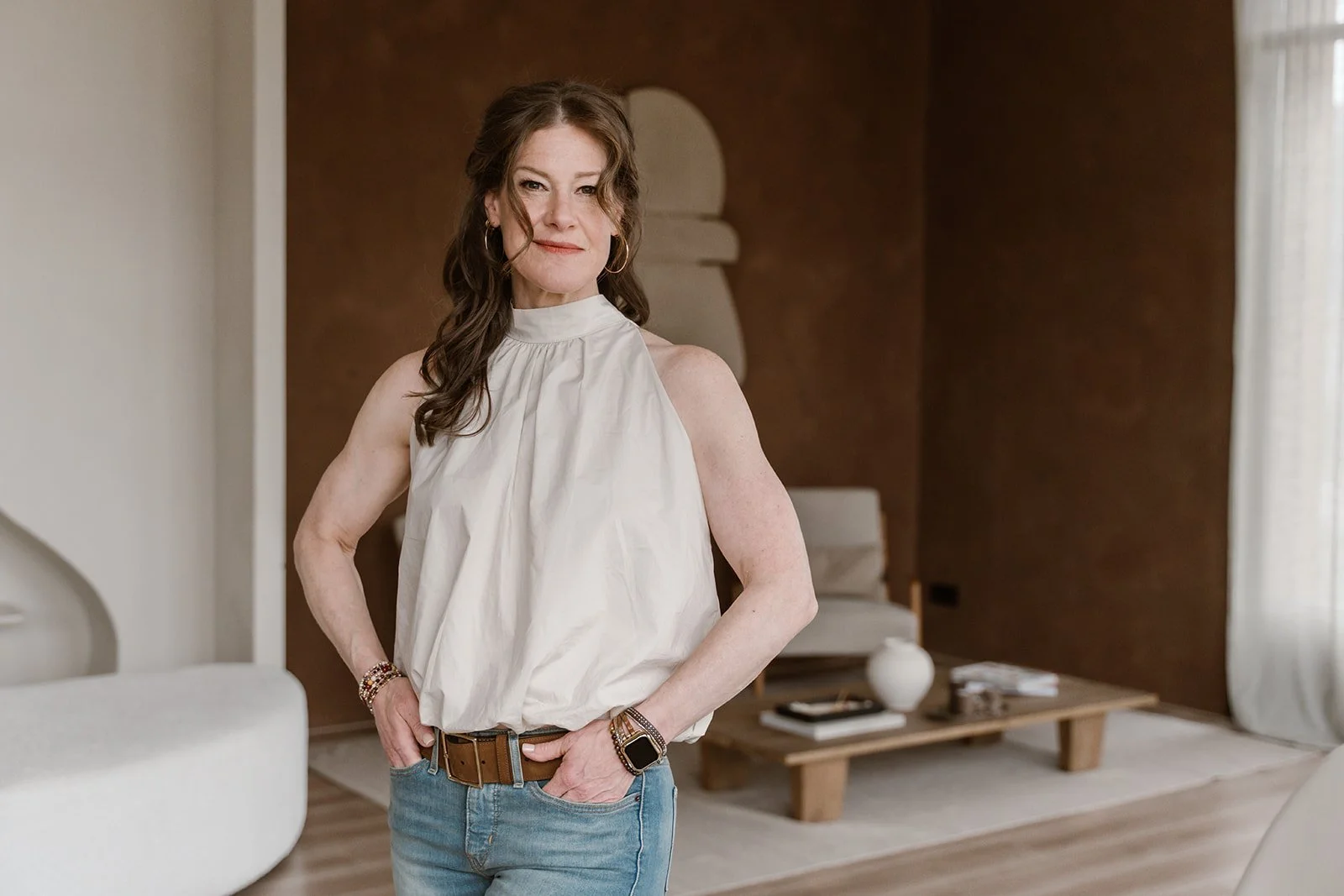
Beth Alpert
The work has changed. The questions haven't.

I have always been drawn to the power of the arts to tell stories, mirror emotions, and make other people feel something.
From a little girl listening to blues, jazz, bluegrass and musical theatre — to being mesmerised by dance, theatre and every kind of human storytelling — I was fascinated by the ways people reveal who they are, how they feel and, in particular, how they overcome.
That fascination first led me towards performing. Being on stage meant understanding another person from the inside:
Who is this person? What is their story? What are they feeling? What is driving them?
Then I began teaching, and the questions grew.
What do they need? What is getting in their way? And what might help them get where they're trying to go?
I began to see that young people weren't only learning lines, music or choreography. They were learning to recognise and express emotion, communicate, take another person's perspective, navigate relationships, take risks and recover when things went wrong.
I began to understand that these weren't simply qualities people either had or didn't have.
They were things we could learn, practise and strengthen.
And I could see young people sitting in classrooms whose minds simply weren't available for learning in the way we expected. Not because they weren't capable, but because something else needed attention first. Anxiety. Relationships. What was happening at home. What they believed about themselves. Behaviour that frustrated the adults around them — but often made much more sense when someone took the time to understand what was underneath it.
Teachers cared deeply. But sometimes there was a significant gap between what a young person needed and what a school knew how to offer.
I wanted to understand that gap. And then I wanted to bridge it.
So I went back to university. Twice.
I studied educational leadership to understand schools as systems, then clinical social work and psychotherapy to understand people more deeply.
Alongside my studies, I spent years in Chicago's child abuse, neglect and delinquency system, working with children and families involved with the courts. That experience made the stakes of this work very real — and showed me how much difference the right adult, at the right moment, with the right approach, can make.
Over time, those worlds stopped being separate.

Sometimes that has meant sitting with one person and helping them understand themselves differently. Sometimes helping a family find one another again. Sometimes supporting a clinician or leader carrying something difficult. And sometimes stepping back to look at an entire school and asking how it can serve its community with greater integrity.
I have also worked alongside school communities through some of the hardest moments they can face — historic abuse by a former staff member, the Brussels terrorist attacks in which a pupil sustained life-altering injuries, sudden deaths of students and teachers, and the prolonged uncertainty of COVID-19.
After thirty years, I am still genuinely excited by the possibility that something can be understood differently, learned, repaired, strengthened or changed.
I want people to understand themselves better, relate to one another more honestly, and feel more able to live, work and lead in ways that truly reflect who they are and what matters to them.
And I want the relationships, conversations, systems and organisations around them to be worthy of the people inside them.

Outside of work, I still sing and dance — although these days, usually when no one is looking. I train hard, lift heavy, and I'm still looking for something to replace rugby, which I only recently and reluctantly gave up. I travel whenever I can and invariably end up talking to strangers wherever I go.
And I spend as much time as I can laughing with and loving my two sons — one is my heart and the other my soul, but I'll never say which is which.